The NTC Successfully Radio-Collared a Tiger for the First Time in Bhutan

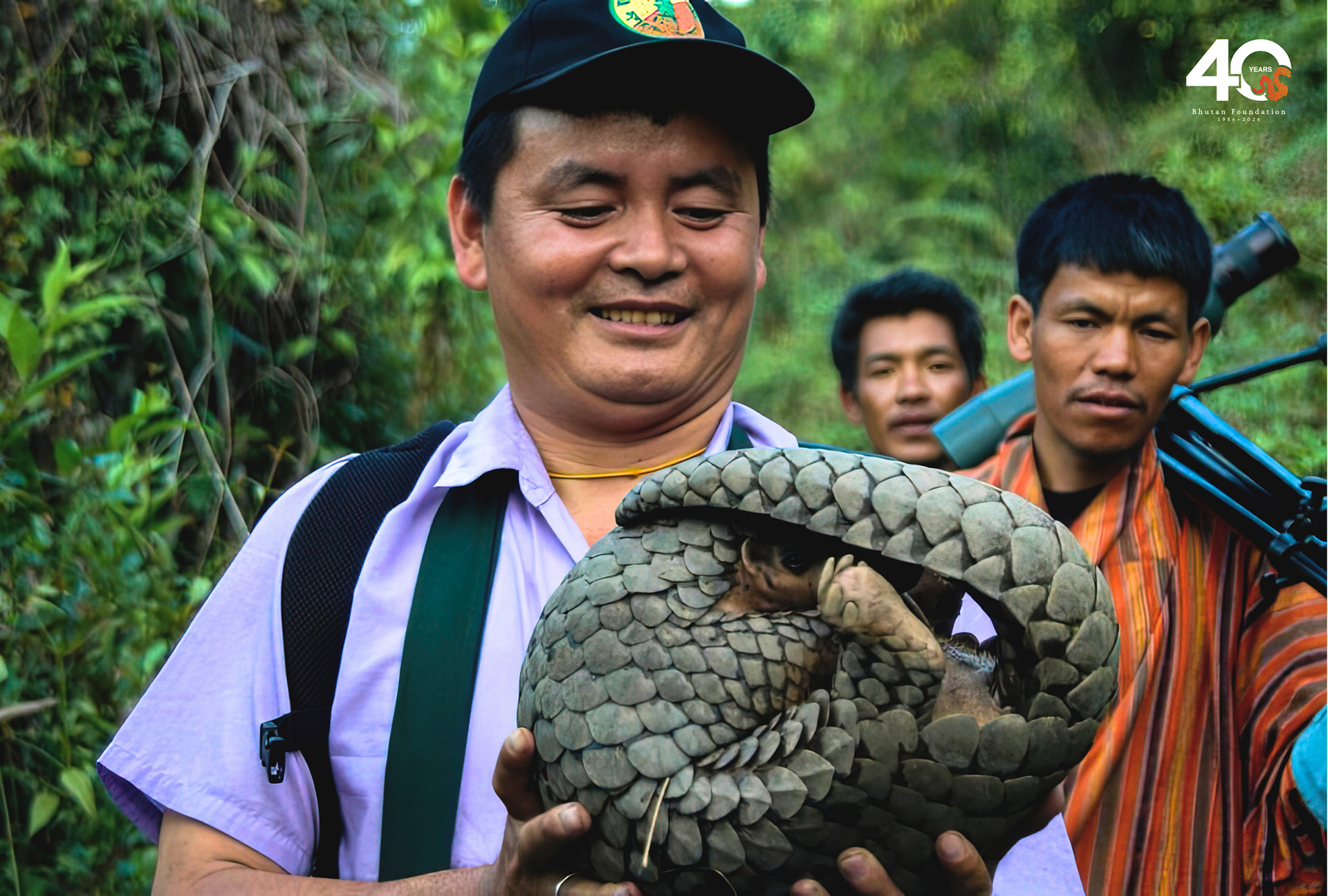
The National Tiger Center (NTC) based in Gelephu under the Department of Forest and Park Services (DoFPS) of the Ministry of Agriculture and Forests has successfully radio-collared a three-year old female tiger weighing 110 kilograms (kg) on February 09, 2018, in Royal Manas National Park (RMNP).

This is the first time a tiger has been radio-collared by a team of Bhutanese biologists and foresters led by Dr. Tshering Tempa, officials from NTC along with forest officials from RMNP, Nature Conservation Division (NCD), and Sarpang Forest Divison.

The tiger collaring team has been in the forests of RMNP looking for tiger signs and monitoring their movements for almost a month. “We have imported trapping kits from the United State of America (USA) and used humane ways of snaring the tiger,” said Dr. Tempa. “We tested with our bare hands to confirm that the traps would not injure the cat,” he added. “As a tiger biologist, I am trained and we had conducted several drills to prepare ourselves.” The whole collaring process lasted about 45 minutes and the tiger was released back into the wilderness without any injuries. “We were a little nervous, but we are happy that everything went according to our plan,” said Dr. Tempa with a sigh of relief.

To mark the auspicious milestone in tiger conversation in Bhutan, the tiger was named Tendrel Zangmo. Tendrel now sends her location every hour through the Global Positioning System (GPS) collar. This will be crucial to understand their movement pattern, identifying key corridors, and mitigating human-tiger conflicts. Bhutan is unique in that its tiger habitat is contiguous across the whole country and extends from lowland subtropical jungles all the way to subalpine forests. The highest altitude for tiger in the world was recorded in Wangchuck Centennial National Park at 4,400 masl (meters above sea level). Dr. Tempa, who heads the National Tiger Center, said that not much is known about the tigers in mountains in the tiger world and we will be a pioneer in providing this critical information to tiger science. This is the real break-through and the beginning of a new era of tiger conservation and monitoring in Bhutan. What is more satisfying is that it is a purely Bhutanese team that carried out the whole operation.

The tiger is an apex predator and an umbrella species, which means ensuring their survival allows many species to live and flourish in its large shared habitat. However, threats to these beautiful cats still exist in the form of killing for profit or in retaliation, destruction of habitat for industries or subsistence. A thriving illicit global trade has drastically reduced tiger populations across its range. Today, fewer than 3,800 tigers exist in the wild, spread across 13 countries in Asia and the Russian Far East.

This collaring project is funded by the Bhutan Foundation as part of a long-term project to conserve Bhutan’s mountain tigers.

Share This Post

Help share our latest news and updates with your network.

Subscribe Now

Get inspiring stories, project updates, and opportunities to make a difference.

Latest News, Updates & Announcements

12th Jomolhari Mountain Festival Marks a New Milestone in Sustainability

12th Jomolhari Mountain Festival Marks a New Milestone in Sustainability

The 12th Jomolhari Mountain Festival kicked off at Dangochong, Soe Gewog, approximately 4,100 metres…

Bruce Bunting Scholarship Recipients 2026

Bruce Bunting Scholarship Recipients 2026

The Bruce Bunting Scholarship for Environmental Leadership continues to support Bhutanese professionals in building the knowledge…

Field Notes from Gaytala

Field Notes from Gaytala

Beauty, Resilience, and Hope in Bhutan’s Highlands Many of the Bhutan Foundation’s programs reach…

Thirty-One Years on the Frontline

Thirty-One Years on the Frontline

For 31 years, Dorji Wangchuk has walked Bhutan’s forests with a responsibility that extends…

Help Build a Stronger Bhutan

Every gift creates lasting change.

Your support will help:

Conserving Bhutan's rich biodiversity and pristine landscapes.

Creating opportunities for children and young people to succeed.

Improving access to quality healthcare and essential services.

Protecting Bhutan's traditions, heritage, and identity.

Other Ways to Give

Make a Wire Transfer

Please contact Ms. Pemma Lhazin at +1-202-609-7363 or pemma.lhazin@bhutanfound.org

Make a Stock Gift

Please contact Ms. Pemma Lhazin at +1-202-609-7363 or pemma.lhazin@bhutanfound.org

Mail a Check

The Bhutan Foundation
1050 Connecticut Ave NW
#66013
Washington, DC 20036

A Gift in Your Will:

There are several ways to make a bequest to the Bhutan Foundation through your will or other estate plans: a residual bequest, a percentage bequest, a specific bequest, or a contingent bequest. Whichever type of bequest you choose, please use the following language:

“I give, devise, and bequeath to the Bhutan Foundation, Inc. (“Foundation”) (EIN: 13-3376290), an Internal Revenue Code section 501(c)(3) organization organized in the State of Delaware, or its lawful successor, the sum of $ _____ [or a percentage of my estate] to be used exclusively for purposes of promoting the Foundation’s charitable mission (the “Purpose”).”

Tax ID Number: 13-3376290

The Bhutan Foundation is a 501(c)(3) registered charitable organization in the United States. Your contribution is tax-deductible to the extent allowed by law.

Stay Connected to Bhutan

Get inspiring stories, project updates, and opportunities to make a difference.


By submitting this form, you are consenting to receive marketing emails from: The Bhutan Foundation, 1050 Connecticut Ave NW #66013, Washington, DC, 20036, https://bhutanfound.org/. You can revoke your consent to receive emails at any time by using the SafeUnsubscribe® link, found at the bottom of every email. Emails are serviced by Constant Contact